


Modern lingo has come up with a range of words to name others’ faults, including their own spouses.
“Mansplain”.
“Triggered”.
“Narcissist”.
While these words can be useful to identify a problem, the problem itself is rarely handled as they should.
We, unfortunately, had normalised tolerating our spouses’ negative traits, justifying that by staying patient, Allah (s.w.t.) will grant us Jannah.
Some of us are even taught to endure abuse in silence, fearing that seeking help would risk shaming our supposed other half.
In truth, none of this is what Islam taught us. Indeed, it teaches us to honour and respect our spouse, but that does not mean letting ourselves be mistreated.
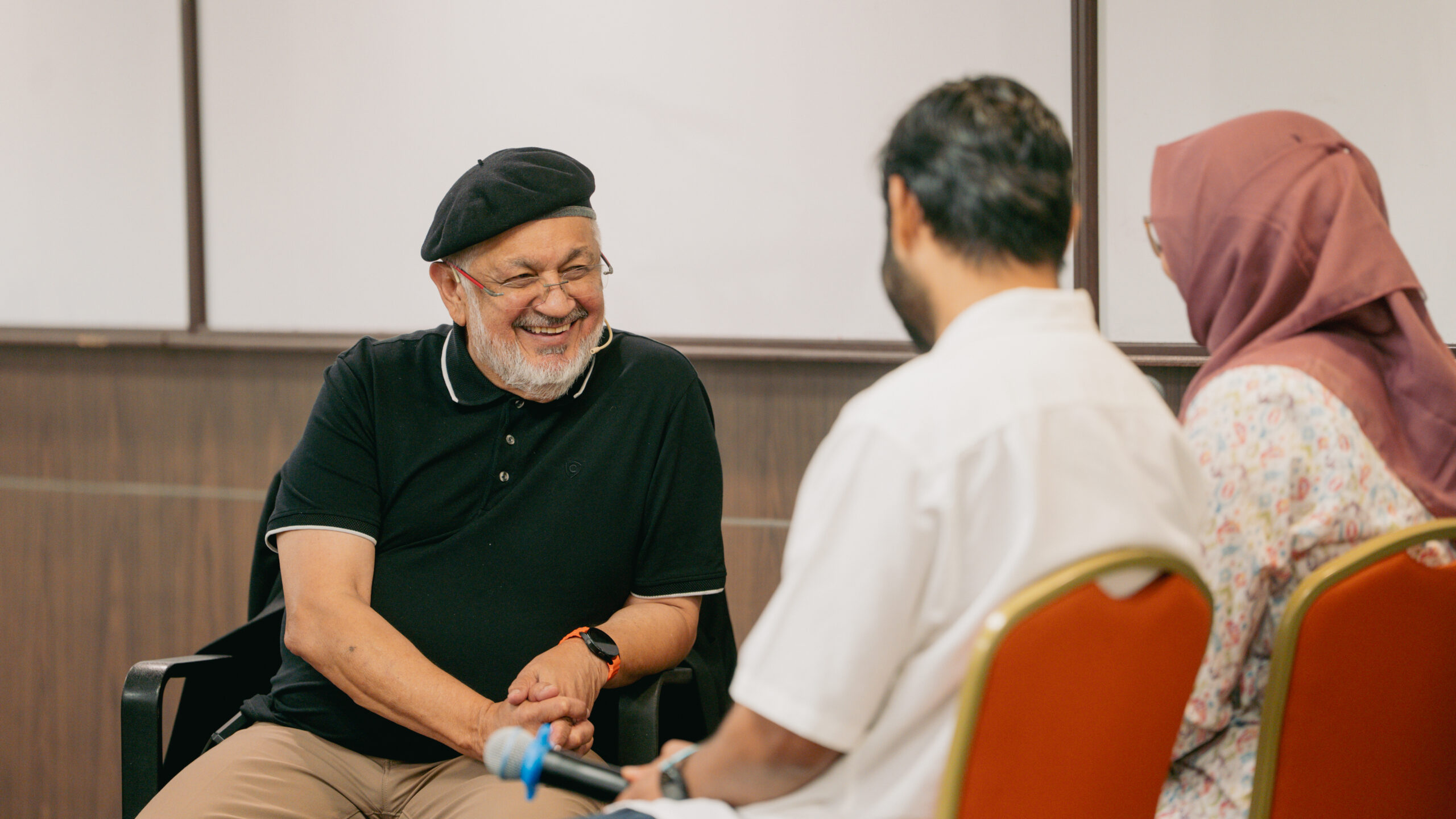
We discussed this issue in depth in our latest event with Edris Khamissa, and it would do us good to revisit the lesson we learned as we carry on with life.
The best of you is the best to his wives, and I am the best of you to my wives.
Jami’ at-Tirmidhi 3895
When conflict strikes the seemingly harmonious relationship we have with our spouse and family member, we are taught to face it together with compassion and compromises.
And the best role model for us to take example from is none other than the Prophet Muhammad (s.a.w.) himself. These are some of his teachings:
1. Communication paired with unbiased judgement allows for a peaceful confrontation
When Aisha (r.a.) was slandered, He sat down with her and calmly enquired about the truth behind the accusation.
No shouting, no pointing fingers, no recounting each others’ past mistakes nor unpleasant habits. And certainly, no shaming each other on social media.
In today’s connected world, it has become so easy, even tempting too sometimes, to expose to the public what is supposed to be private between spouses.
But that should never be the case. While we may seek the counsel of others in moments of desperation, we should share our problems only with those who know and genuinely care about us.
This is so that we can cover each others’ aib and prevent the already existing wound from festering in our marriage because of unwarranted opinions.
2. Patience and wisdom and necessary in navigating emotional moments
Another well-known marital conflict involved the Prophet (s.a.w.) and Aisha (r.a.), when she grew jealous over food sent by one of his other wives.
Overcome by envy, she broke the bowl containing it. Yet, he responded calmly, treating her reaction as a natural expression of emotion. Then, rather than telling her to pick up the broken pieces, he gathered them himself so as not to fan the fire already burning in her.
Through this incident, we see how the Prophet (s.a.w.) balanced emotional intelligence with thoughtfulness in managing conflict.
A happy marriage doesn’t have to be rose-tinted. It just needs a working compass to navigate the storms that occasionally come to pass.
3. Pure love can bridge difference in preferences no matter how big
Finally, a happy marriage treats difference as a welcome spice, not a reason to grow apart.
As a Prophet, Muhammad (s.a.w.) naturally sought closeness to Allah (s.w.t.) at every opportunity. When the chance came on a night he was spending with Aisha (r.a.), he did not simply leave her alone. He communicated with her of his intention with sincerity.
Perhaps it was his gentle approach that drew such a warm reply from her as she replied, “By Allah, I love being close to you, and I love what makes you happy (or what you love).”
Aisha (r.a.) surely missed her husband’s company, yet their love was not so shallow that a difference in how to spend the night could divide them.
The lesson here is that we can differ from our spouses in priorities without being in constant conflict. We can find a middle ground as we each pursue our own wishes.
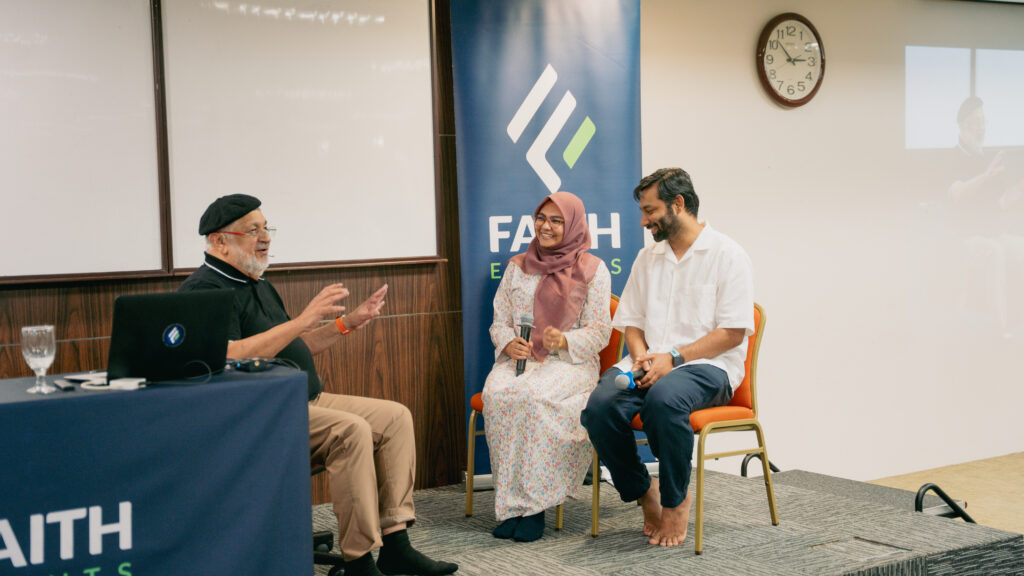
“There are many things that can be done to show love.”
– Edris Khamissa
Allah (s.w.t.) created us in pairs, and in this world we are given the chance to love and be loved. There is no better way to practise that love than by following the example of the Prophet (s.a.w.).
May our intention and effort to love our spouses and families bring us a blessed life in this world, and may it carry us all to Jannah, ameen.