


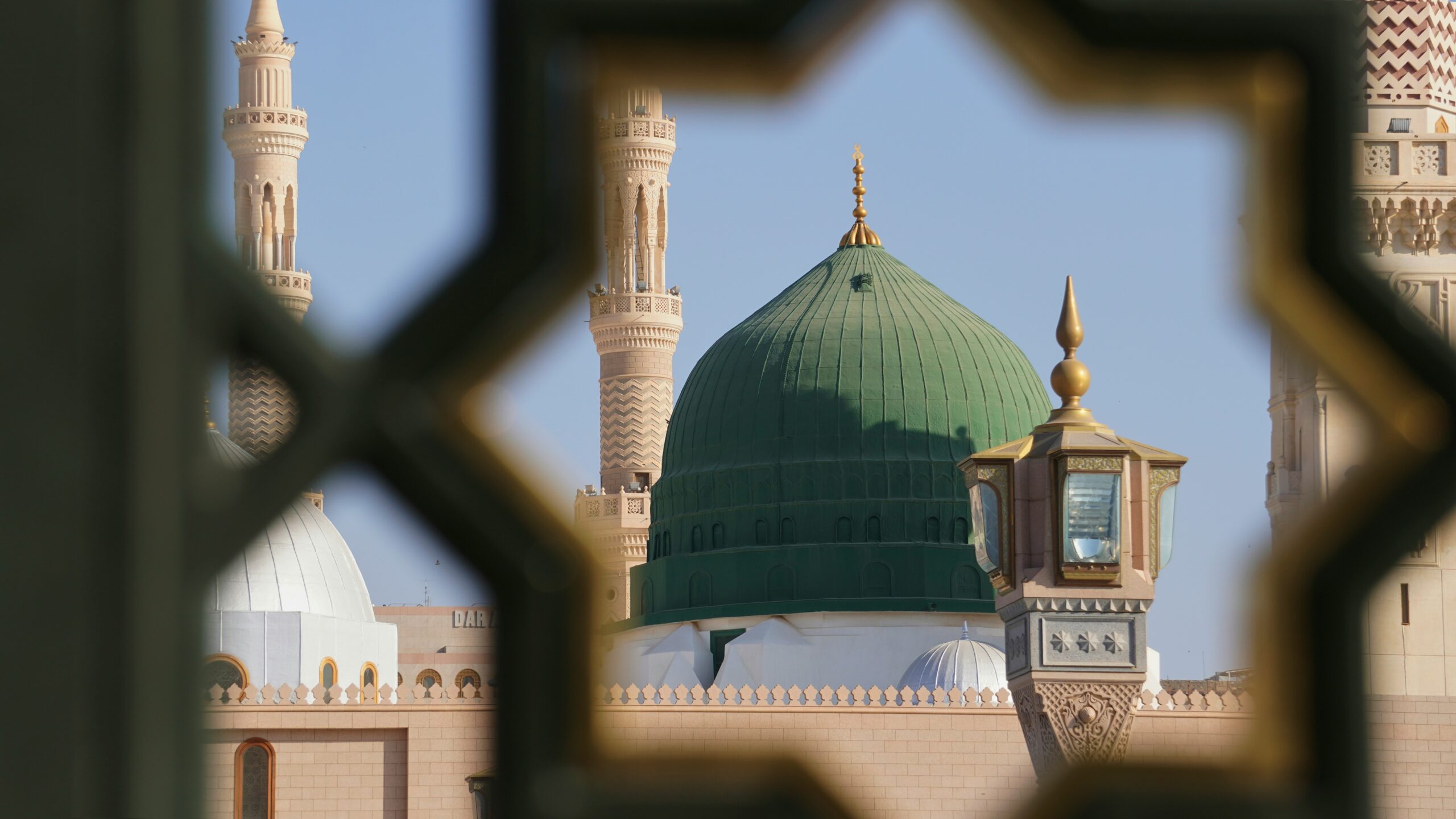
Prophet Muhammad (s.a.w.) is rightfully a revered individual.
His seerah is told in great grandeur, particularly in how he struggled and persevered in spreading Islam to the ummah.
We are then told to love him and honour his Sunnah to be a good Muslim.
Yet how do we love someone we know mostly through grand narration? When we recall the strength of his faith and the effort he willingly made for the religion, he feels almost too perfect, and because of that, out of reach.
I, personally, set the thought aside until I stumbled across Ustadh Asim Khan’s “The Simple Seerah: The Stories of Prophet Muhammad (s.a.w.)” series, whose novel-like narration made him someone I could finally relate to and empathise with.
It was through this series that I finally learned to humanise my view of Rasulullah (s.a.w.), a shift Ustadh Asim himself seemed to have experienced, as he confessed in his foreword:
I feel like I never really knew who the Prophet was until I completed that book.
I felt regret. Why has it taken this long for me to learn something so important?
Now, what does it even mean to humanise the Prophet (s.a.w.)?
To humanise someone is to see them not just as a title or a legacy, but as a person who is relatable and not distant.
Applying this to the Prophet (s.a.w.) can feel uncomfortable. He is a highly respectable individual that we can’t simply equate him to an ordinary person.
And yet, it is incredibly important for us to remember that he was still very much human, with human flaws, experiences, and emotions.
Like us, he knew happiness and struggle, highs and lows, as well as regrets that carried their own lessons.
Humanising the Prophet (s.a.w.), then, means seeing him as a fellow human being, one who experienced trials similar to ours, and whose footsteps we can genuinely follow, not just admire from afar.
“Indeed, in the Messenger of Allah you have an excellent example for whoever has hope in Allah
Surah Al-Ahzab, 33:21
and the Last Day, and remembers Allah often.”
This is precisely why Allah (s.w.t.) calls him an excellent example rather than an unreachable ideal.
And in following his example, we are not only shaped into a better version of ourselves, but rewarded for the effort itself.
Because by learning and understanding his seerah, we come to understand the significance of Qur’anic verses as guidance revealed for his situations, which are just as applicable to our own contemporary lives.
We also come to understand the weight of his Sunnah in becoming better Muslims, drawing us closer to our Creator, earning His favour, and helping us leave behind what He has forbidden.
Getting to know the Prophet (s.a.w.), in this way, means getting to know Islam on a whole new level.
Finally, we are not only taught to follow the Prophet (s.a.w.), but to revere him, and one of the clearest ways Allah (s.w.t.) instructs us to do so is through salawat:
“Indeed, Allah showers His blessings upon the Prophet, and His angels pray for him.
Surah Al-Ahzab, 33:56
O believers! Invoke Allah’s blessings upon him, and salute him with worthy greetings of peace.“
Salawat is our prayer for the Prophet (s.a.w.) to be blessed with His rahmah, our gesture of gratitude for all he gave to this religion, and a means for us to attain his shafaat (intercession) in the hereafter.
So perhaps, it was never about the distance between his status and ours. It was about realising there was less distance than we thought all along.
Every seerah we read, every salawat we send, is simply us taking one step closer to him and, through him, one step closer to Allah (s.w.t.).
May Allah (s.w.t.) grant us the sincerity to truly know him, the strength to follow his footsteps, and the honour of his shafaat on the Day of Judgement. And may we all be united with him, in the company of those he loved, in His paradise. Ameen.