Death is not something we can mentally prepare ourselves for, but inevitably we have toprepareourselvesto face it.
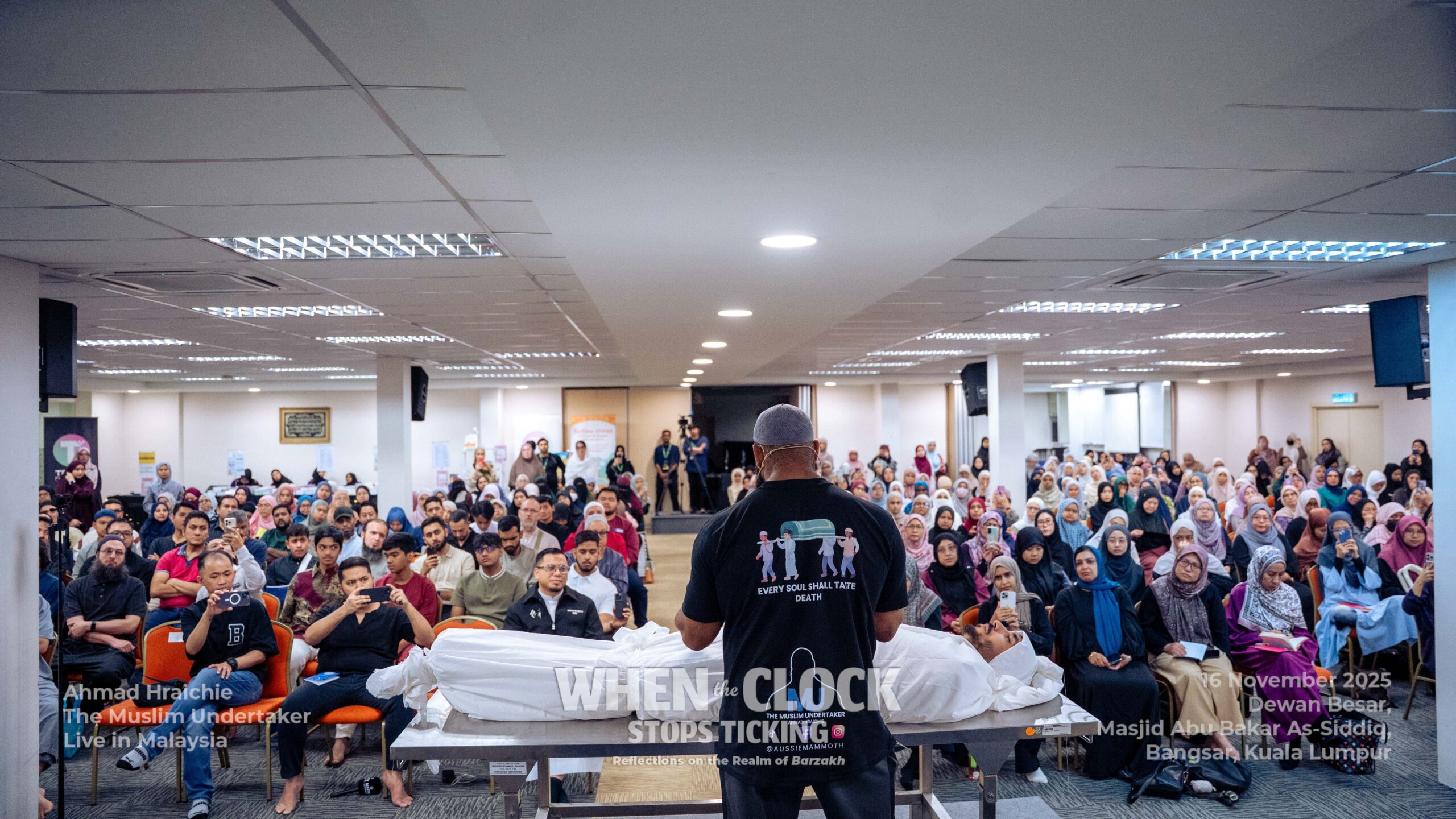
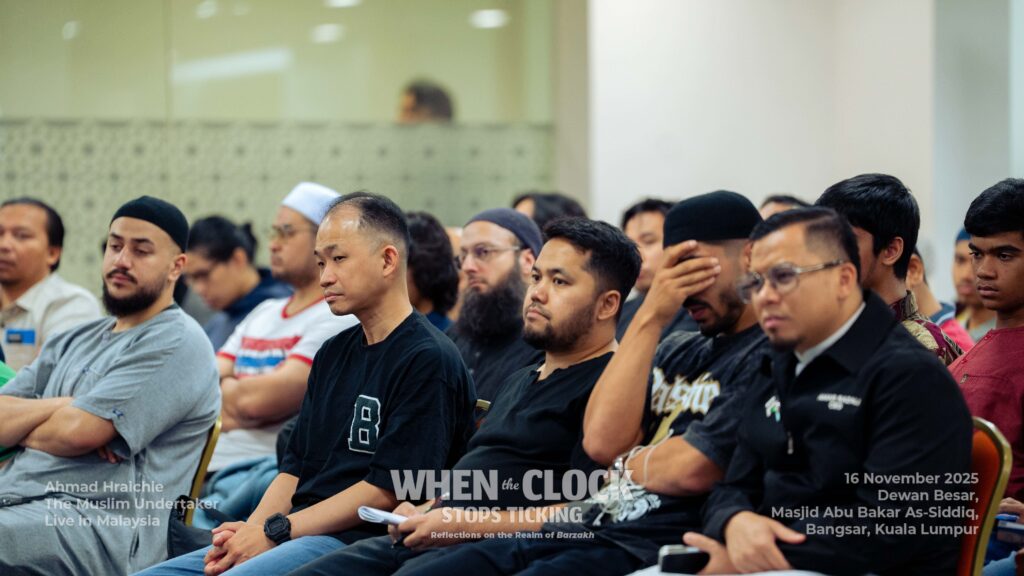
The tickets for Ahmad Hraichie’s event were sold out, and some may wonder: what is it about death that draws people from across the country to attend this event?
Perhaps we already understand that death is finite.
Yet in the constant hustle and bustle of life, climbing the corporate ladder, managing responsibilities, raising children, it’s so easy to forget that it could happen anytime.
Maybe that’s why the event’s title, “When the Clock Stops Ticking: Reflections on the Realm of Barzakh” resonates so deeply.
It invites us to pause, breathe, and reflect on the reality that each and every one of us has an expiry date. We may be alive and healthy today, but tomorrow is never promised.
Remember the time when Ahmad Hraichie demonstrated, from start to finish, how the washing and shrouding of a deceased person is done?
It was a deeply humbling moment for everyone in the room.
And while everyone seems to feel a sense of fear, he reminded us that we shouldn’t fear the dead because clearly, it’s the living who are capable of hurting us.
As someone who has been washing, shrouding, and undertaking the deceased since he was just 18, Ahmad Hraichie shared something quietly profound.
Over the years, he has encountered certain bodies that seemed… pure. Almost glowing.
As curious as he was, he would ask their families about the person’s life and surprisingly, the answers were remarkably consistent. These were people who were forgiving when they were alive. Those who held no grudges. Peacekeepers in their own ways.
Let this be a gentle reminder for us to learn the art of forgiveness.
It takes courage sometimes more than we’d like to admit but when we look at it differently, forgiveness becomes less impossible.
We don’t forgive because someone deserves it but rather we forgive for the sake of our own peace of mind. Allah (s.w.t.) affirms in this verse that the reward for those who choose peace will come directly from Him, not from other people:
وَجَزَٰٓؤُا۟ سَيِّئَةٍۢ سَيِّئَةٌۭ مِّثْلُهَا ۖ فَمَنْ عَفَا وَأَصْلَحَ فَأَجْرُهُۥ عَلَى ٱللَّهِ ۚ إِنَّهُۥ لَا يُحِبُّ ٱلظَّـٰلِمِينَ ٤٠ The reward of an evil deed is its equivalent. But whoever pardons and seeks reconciliation, then their reward is with Allah. He certainly does not like the wrongdoers.
(Surah Ash-Shuraa 42:40)
In truth, forgiveness is an act of self-love. It’s a compassionate choice we make for ourselves, so we are not held hostage by someone else’s hurtful actions. By letting go, we free our hearts from burdens that were never meant to be carried forever.
When death arrives, our remorse carries no weight nor meaning. Whether it’s regret over the wrongs we committed or the good deeds we kept postponing, none of it matters once our time is up.
So here’s a note to you, and a note to myself: let us feel that regret now, while we still have breath because regret in life gives us a chance to change.
When our clock finally stops ticking, it stops. No extensions, no second chances, no warnings.
We don’t know when our time will end, but it certainly will.
“The way you live is the way you die, and the way you die is the way you will be resurrected.”
Ahmad Hraichie
So let us live as if today were our last, so we would not be ashamed to return to Him.



1 Comment
Assalamualaikum,
This is a good writing on the recap of the event. Thank you for reminding and sharing with us with some contents from the event. Please keep writing.